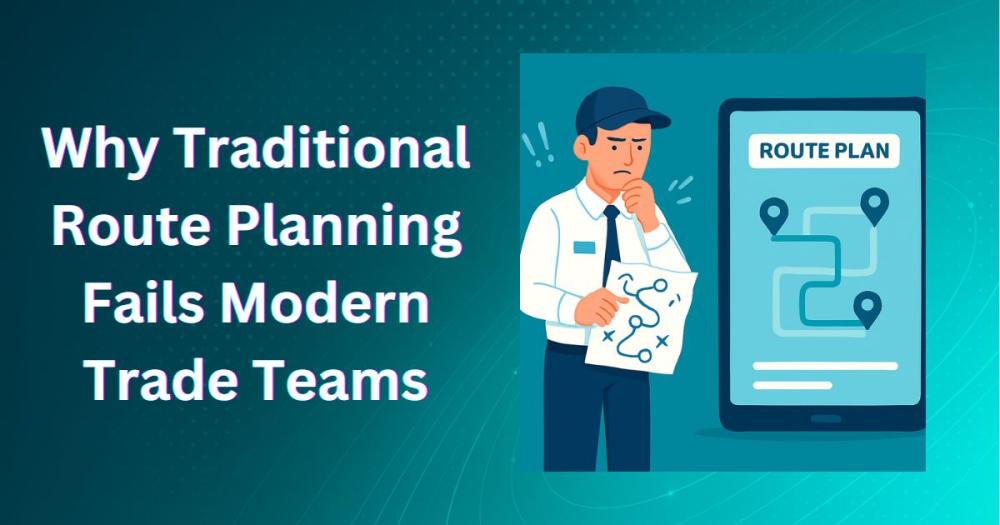
1. It Assumes Every Day Goes Exactly as Planned
The biggest flaw of old-school planning:
It expects the world to behave perfectly.
But in reality:
- Managers aren’t available
- Stores have unexpected closures
- Traffic explodes
- A visit takes longer than expected
- A new task appears
- A retailer calls with a problem
Static plans break the moment real life hits.
Modern teams need route plans that adapt instantly — not plans that collapse by 10 AM.
2. It Relies Too Much on Rep Memory
Reps are routinely expected to remember:
- Visit frequency rules
- Priority stores
- Past issues
- Competitor activity
- Task deadlines
- Store hours
- Personal notes
That’s impossible at scale.
Memory-based planning causes:
- Missed visits
- Rushed tasks
- Forgotten follow-ups
- Incomplete photo reports
Execution becomes inconsistent because humans forget — systems don’t.
3. It Focuses on Geography Instead of Business Impact
Old routing logic = “What’s closest?”
Modern routing logic = “What matters most?”
Traditional planning ignores:
- Store revenue
- Task urgency
- Promo activation
- Out-of-stock risk
- Competitive threats
Geography-only planning creates coverage gaps that cost thousands.
4. It Ignores Task & Promo Requirements
A route is not just a list of stores — it’s a sequence of actions inside each store.
Traditional routing rarely considers:
- Task duration
- Promo deadlines
- Display builds
- Manager meetings
- Priority checklists
This leads to late or skipped tasks that directly hurt sales.
5. It Doesn’t Account for Visit Duration
Traditional planning assumes visits take the same amount of time.
They don’t.
Store A may take 6 minutes.
Store B may take 30.
Store C may need photos, POSM changes, and a display rebuild.
Bad duration predictions destroy the entire schedule.
6. It Lacks Real-Time Adjustments
When the day changes, reps using traditional planning must:
- Stop
- Think
- Rebuild the route manually
- Guess the next best stop
This wastes 20–45 minutes per adjustment — repeatedly throughout the week.
Modern teams cannot afford that.
7. It Provides Zero Manager Visibility
Traditional routing hides the truth from managers.
They can’t see:
- Who skipped a store
- Which tasks were done
- Whether the route made sense
- How many hours were wasted
- Whether priorities were hit
Managers end up reacting to problems instead of preventing them.
Why Modern Trade Teams Need Smarter Routing
Today’s retail world moves too fast for outdated methods.
Smart routing must include:
- Priority logic
- Store hour alignment
- Task + promo integration
- Visit duration prediction
- Real-time recalculation
- Full manager visibility
- Automatic frequency planning
This is not just efficiency — it’s strategic execution.
Conclusion
Traditional route planning fails because it was never designed for:
- The complexity of modern retail
- The speed of today’s sales cycle
- The pressure on field teams
- The volume of tasks and promos
- The level of execution customers expect
Teams that still rely on manual or geographical routing are losing sales daily.
Teams using intelligent routing systems are outperforming everyone else.
The future belongs to trade teams who plan with logic — not with guesswork.